When adapting a home for long-term mobility, homeowners often consider three primary solutions: stairlifts, wheelchair platform lifts, and residential elevators. Selecting the ideal option depends on the user’s mobility status, home structural layout, and overall budget.
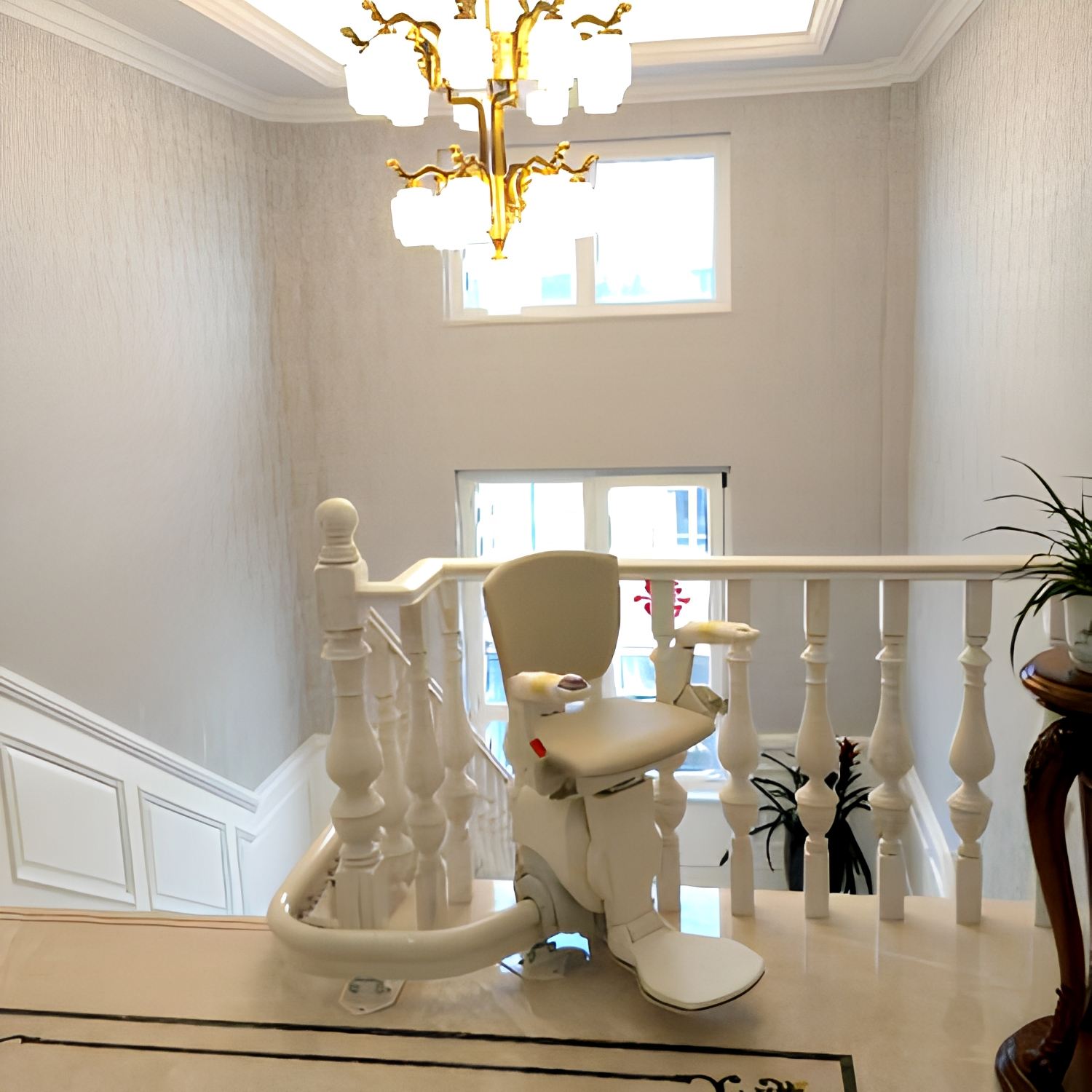
| Factor | Stairlift | Wheelchair Platform Lift (IPL/VPL) | Residential Elevator |
| Target User | Individuals able to transfer and sit | Roll-in wheelchair users unable to transfer | Multi-user households, full accessibility |
| Space Footprint | Low (attaches to existing stairs) | Moderate (requires clear landing space) | High (requires dedicated shaft or cutout) |
| Installation Time | 1 day (Straight) / 1–2 days (Curved) | 1–3 days | Weeks to months (structural work required) |
| Purchase Price | $2,200 – $15,000 | $5,000 – $20,000+ | $25,000 – $50,000+ |
| Home Alteration | Minimal (rail mounts to treads) | Moderate (ground pad/landing prep) | Significant (framing, electrical, hoistway) |
Recommended: Stairlift
Reasoning: Fastest installation with minimal disruption. It mounts directly to stair treads without altering wall framing, preserving the home’s original layout.
Recommended: Inclined or Vertical Platform Lift (VPL)
Reasoning: Allows the individual to remain in their wheelchair during travel between levels, eliminating risky manual transfers.
Recommended: Home Elevator (e.g., Shaftless or Vacuum/Pneumatic Elevator)
Reasoning: Accommodates multiple passengers, heavy luggage, or groceries simultaneously, while serving as a long-term architectural enhancement that adds property resale value.
I’m Laura, the author of this article and the CEO & Marketing Director of WEMET. With over 15 years of experience in the intelligent lifting industry, I’m dedicated to helping clients find the right access solutions for their needs. If you have any questions, feel free to contact me at any time.

 AWP
 Industrial Lift
 Home Elevator
 Intelligent Storage