Whether managing an industrial facility, construction site, or commercial warehouse, elevated work requires safe, reliable, and efficient aerial access. Scissor lifts—a primary class of Mobile Elevating Work Platforms (MEWPs)—provide a stable vertical work area with high lifting capacities. However, selecting the wrong model can lead to operational bottlenecks, floor surface damage, or job site hazards. This comprehensive guide outlines the essential factors to evaluate before purchasing or renting a scissor lift.
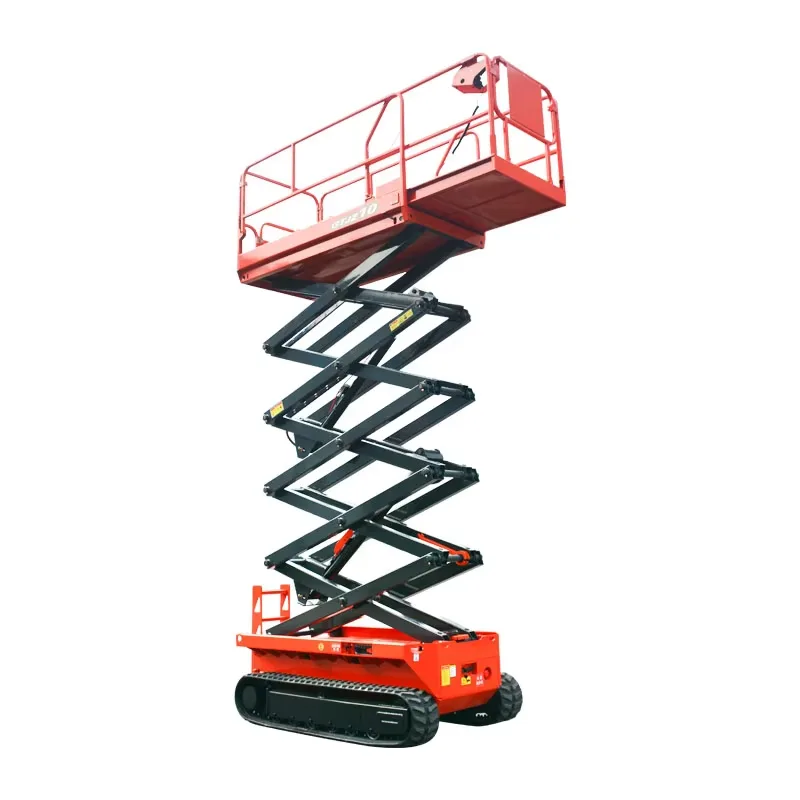
Scissor Lift
Scissor lifts are categorized primarily by their power system, terrain adaptability, and primary application environment:
Electric Scissor Lifts: Powered by deep-cycle lead-acid or lithium-ion batteries. Designed with solid non-marking rubber tires and quiet zero-emission operation, making them the standard choice for indoor facilities, finished floor maintenance, and warehousing.
Rough Terrain (RT) Scissor Lifts: Driven by internal combustion engines (diesel, dual-fuel) or heavy-duty battery systems. Equipped with heavy-tread lugged tires, higher ground clearance, and four-wheel drive to navigate unpaved construction sites, mud, and gravel.
Hydraulic Stationary & Platform Lifts: Engineered for dedicated industrial workstations, loading docks, and production lines. These fixed or semi-portable scissor platforms prioritize heavy payload capacity over vehicle mobility.
When selecting a scissor lift, evaluate features that enhance site productivity and operator protection:
Automatic Pothole Protection System: Interlocking safety guards deploy automatically when the platform is elevated, reducing the risk of tip-overs if a tire drops into a hole or surface break.
Tilt Sensor & Motion Alarms: An integrated multi-axis sensor cuts off lift functionality and sounds an alarm if the chassis exceeds its maximum safe operational slope.
Roll-Out Deck Extension: Provides additional horizontal reach and deck space, allowing operators to extend over obstacles, piping, or machinery below.
Proportional Drive & Lift Controls: Variable-speed joystick controls ensure smooth acceleration, delicate positioning near high structures, and precise speed management.
Assess Surface Conditions & Floor Load: Determine whether the machine will operate on smooth concrete, elevated slabs with strict wheel-load limits, or uneven soil requiring hydraulic outriggers.
Determine Working Height vs. Platform Height: Working height equals the platform floor height plus 6 feet (approx. 1.8 meters) to account for an operator’s comfortable reach.
Check Regulatory Compliance & Warranties: Verify that the equipment meets international standards (such as ANSI A92.20 in North America or CE/EN280 certification in Europe) and check the drivetrain and hydraulic warranty coverage.
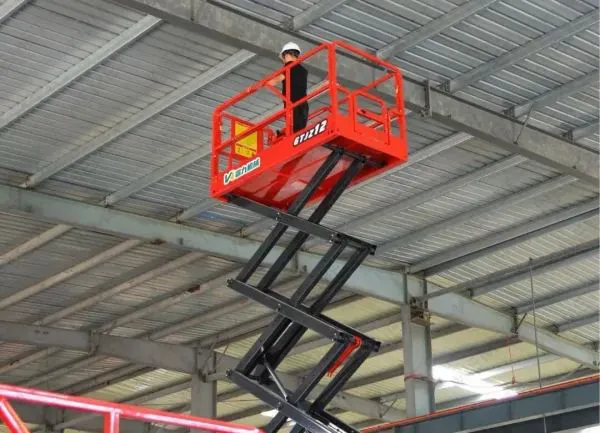
I’m Laura, the author of this article and the CEO & Marketing Director of WEMET. With over 15 years of experience in the intelligent lifting industry, I’m dedicated to helping clients find the right access solutions for their needs. If you have any questions, feel free to contact me at any time.

 AWP
 Industrial Lift
 Home Elevator
 Intelligent Storage