Stairs slow daily life and create risk. Ramps eat space and demand strength. Families need a simpler fix that works every day, in any weather.
A wheelchair elevator—often called a vertical platform lift—uses a powered platform to move a wheelchair or scooter between levels at home. It improves mobility, safety, and independence with a compact footprint and simple controls.
About Us (Authority & Trust)
We’re WEMET Lift Machinery Co., Ltd.—a leading intelligent lifting equipment manufacturer since 2014. We design and build Aerial Work Platforms (AWP), Industrial Lifting Solutions, Hydraulic and Traction Home Lifts, and Intelligent Storage Systems. Our registered brands—WEMET®, 力千钧®, and Parli—serve 95+ countries with 9,000+ units delivered. We meet CE, ISO, and global safety standards, and we back every project with full-cycle service, spares, and responsive support. We help construction contractors, warehouses, industrial manufacturers, property developers, facility maintenance companies, residential elevator dealers, OEM lift brands, and access equipment distributors move people and goods safely, smoothly, and efficiently.
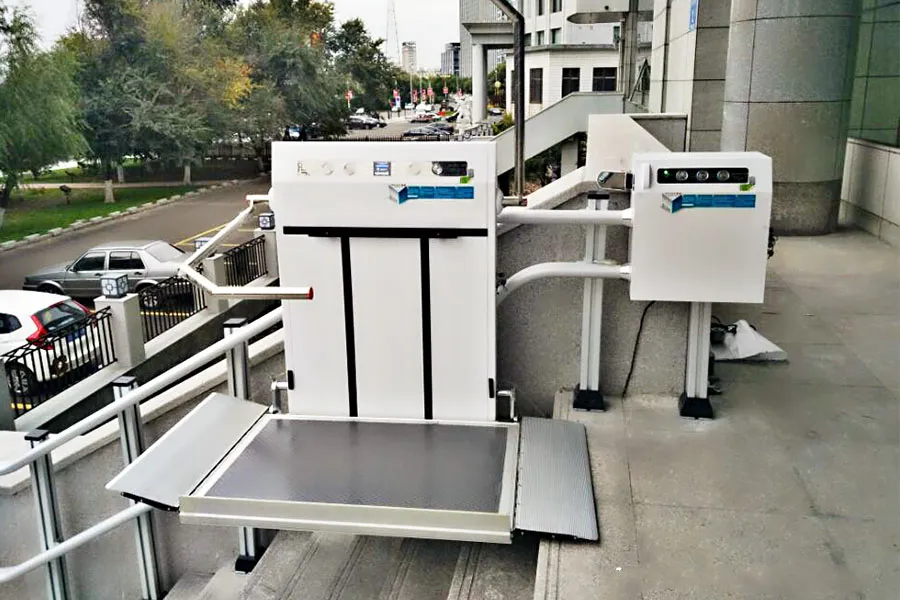
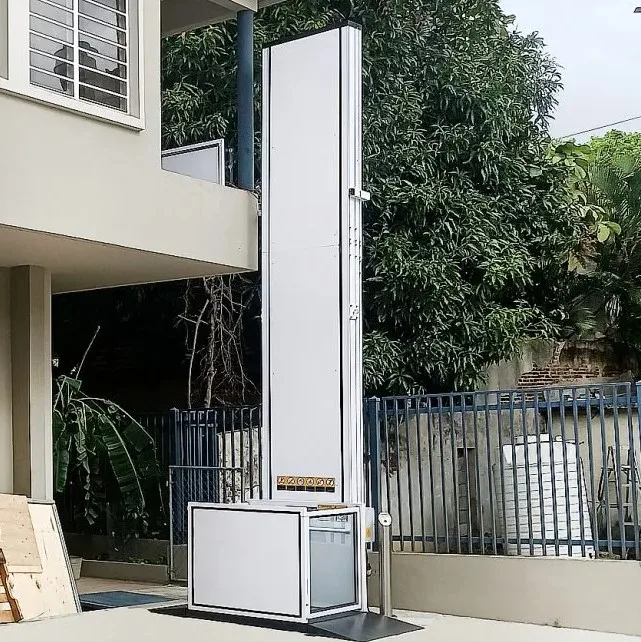
A wheelchair elevator is a residential vertical platform lift (VPL) that raises a wheelchair platform straight up between levels. It’s a full platform lift, not a chair on a rail like a stair lift. You roll on, press a button, and ride—independently. The platform is flat, stable, and sized for a scooter or wheelchair, a caregiver, or a walker.
Unlike a long ramp, a VPL uses vertical travel, so it needs a smaller footprint and a shorter approach path. That makes it ideal at a porch or deck, inside a garage, or between a basement and main floor. For families with limited mobility, it removes the barrier of stair and staircase while staying compact and less intrusive in design.
Works with wheelchairs, scooters, and walkers
Simple entry and exit; no transfers between seats
Fits indoor or outdoor use; can enclose where needed
Easy to install compared with a full home elevator
Choose a platform lift if you need to transport a wheelchair or scooter as-is, without transfers. A long ramp can work for short rises, but it grows quickly with code-compliant slope (1:12 or gentler). Many homes do not have room for that incline. A stairlift helps one seated rider, but it does not carry a wheelchair.
Good fit for a platform lift

When a stairlift may be enough
Rider is comfortable transferring to a seat
No need to move a scooter or wheelchair between levels
Most residential VPL installation takes 1–2 days after site prep. Many models are easy to install with modular sections you can assemble quickly. You’ll need a level pad, indoor or outdoor use-ready finishes, and a dedicated outlet per the manual.
Typical steps
Maintenance
Annual checks keep drives and gates in spec.
Light cleaning and visual checks extend the life of your elevator.
Not every home needs a fixed VPL. A portable unit can solve a short-term barrier (events, rehab, commercial use booths). A nano vertical platform lift can squeeze into corners where nothing else fits. These vpls shine in commercial settings and public spaces too, but always verify code rules for residential or commercial sites.
Pros
Cons
Modern lifts are built with safety in mind. Lifts are built with interlocks, sensors, and smooth drive logic.
Core protections
Gate interlocks and entry and exit logic
Emergency stop
Non-slip platform
Weatherproof packages for outdoor use
Audible/visual alerts
Use tips
Keep the platform clear; lock brakes on the chair.
Train all family members.
Schedule yearly service to protect the life of your elevator.
How much weight can a residential VPL carry?
Most models list a capacity of 750 pounds (often shown as 750). Heavier-duty options exist. Always check the nameplate.
Can I use a wheelchair lift outdoors year-round?
Yes. Models like Harmar Highlander II, Bruno VPL, Ameriglide Hercules, and Savaria Multilift offer outdoor or enclose packages for weather.
Do I need major construction to install one?
Usually not. Many are easy to install, need only a level pad and an outlet. Your dealer will verify egress and set the best configuration.
Is a platform lift cheaper than a home elevator?
Often, yes. A VPL is typically more economical than a full home elevator with shaft and elevator cab. It’s also less intrusive than a long ramp.
Will a platform lift work with my scooter?
Yes. Most platforms handle a scooter or wheelchair. Confirm platform sizes and turning space with your installer.
Can I power it from a standard outlet?
Many residential VPLs use standard household power. Verify voltage and amperage in the manual; your installer will confirm.
I’m Laura, the author of this article and the CEO & Marketing Director of WEMET. With over 15 years of experience in the intelligent lifting industry, I’m dedicated to helping clients find the right access solutions for their needs. If you have any questions, feel free to contact me at any time.

 AWP
AWP
 Industrial Lift
 Home Elevator
 Intelligent Storage