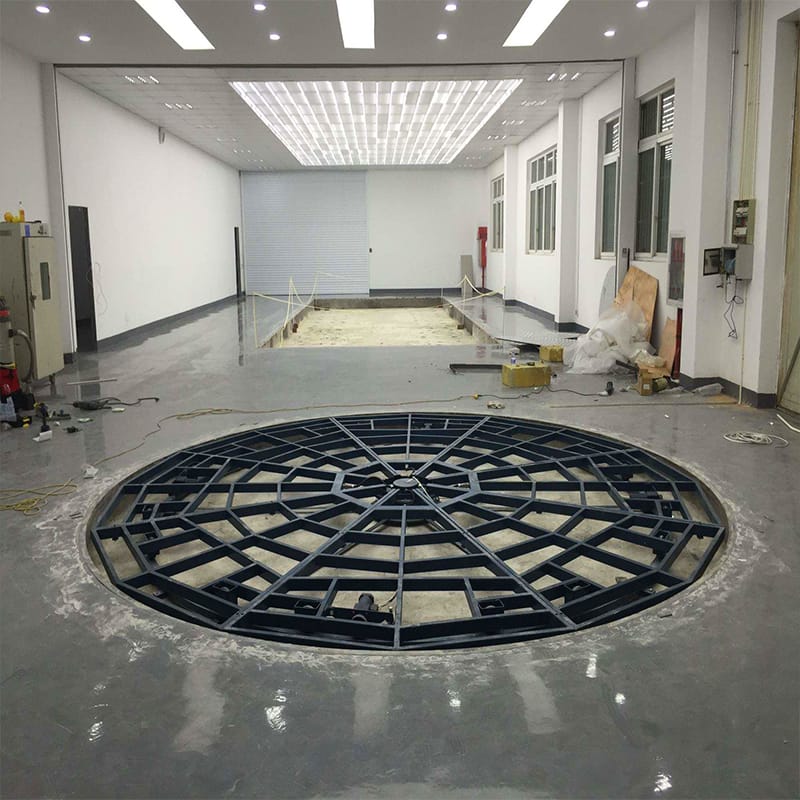
Car Turntable
Investing in a revolving vehicle platform requires careful consideration of mechanical specifications, drive mechanisms, site preparation, and load capacities. With various designs on the market—ranging from surface-mounted temporary platforms to flush-recessed outdoor driveways—choosing the correct turntable depends directly on your specific site conditions and vehicle usage.
This definitive technical buyer’s guide breaks down the core mechanical components, drive technologies, and architectural prerequisites you must evaluate before purchasing a car turntable.
The heart of any rotating platform is its mechanical drive system. The two main drive mechanisms used in modern vehicle turntables are:
Mechanism: Uses polyurethane-coated drive wheels pressing against a continuous steel drive ring beneath the platform.
Best For: Standard residential driveways, indoor showrooms, and moderate-weight passenger vehicles.
Pros: Smooth, quiet operation, cost-effective initial investment, and low maintenance requirements.
Cons: Can experience slippage under extremely heavy loads or in ice-covered, unmaintained outdoor environments.
Mechanism: Uses a heavy-duty motor fitted with a hardened drive pinion that meshes directly into precision gear teeth fixed along the turntable structure.
Best For: Heavy commercial applications, extreme weather climates, heavy EV vehicles, and commercial auto displays.
Pros: Zero mechanical slippage, high torque delivery, exact degree positioning accuracy (±0.5°), and long-term durability in outdoor elements.
Cons: Higher initial capital investment.
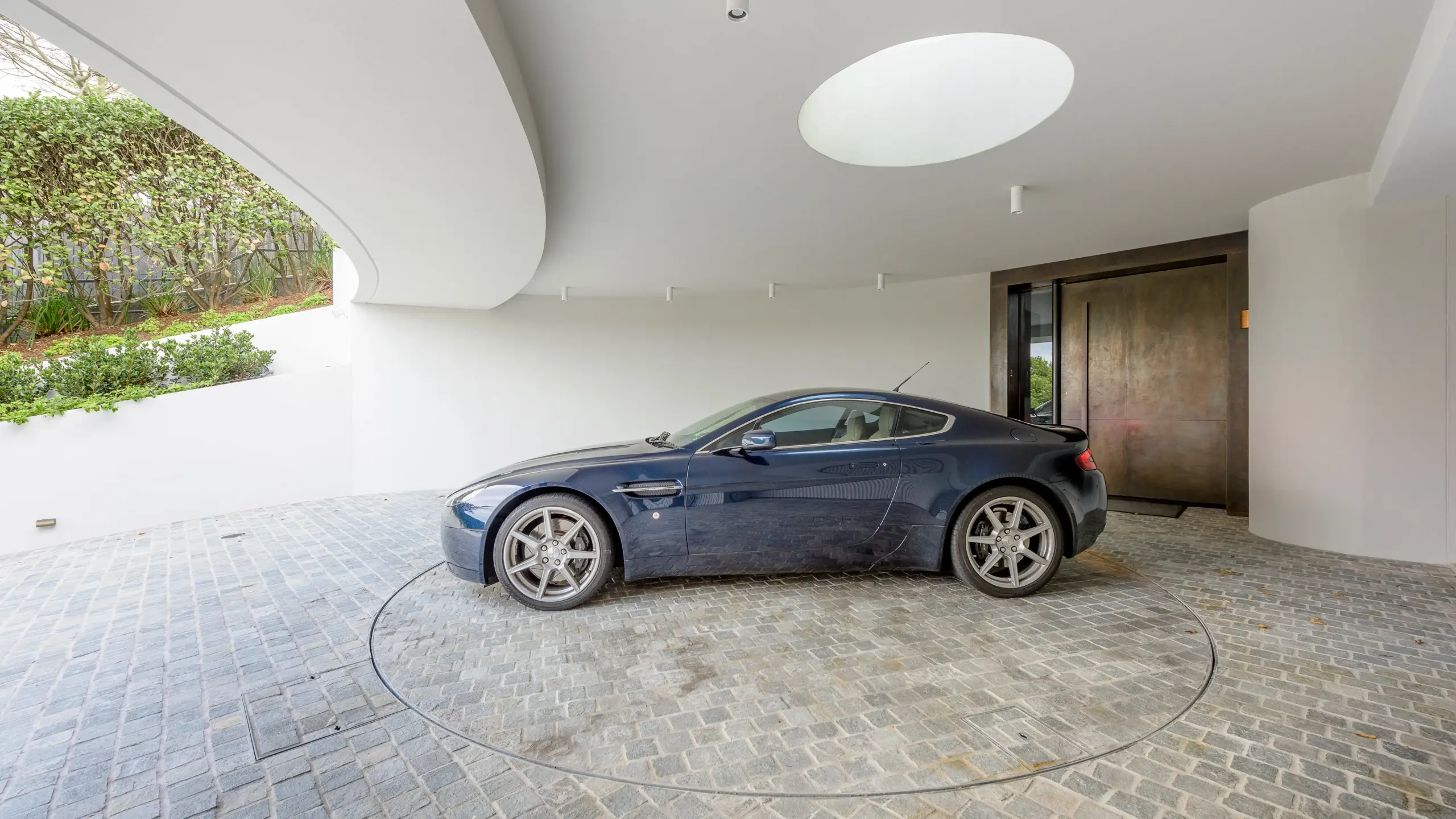
Depending on your project’s architectural constraints, platforms can be installed in two main configurations:
| Feature | Flush-Mounted (In-Ground Recessed) | Surface-Mounted (Above-Ground) |
| Visual Profile | Seamlessly flush with existing driveway/floor | Elevated platform with peripheral access ramps |
| Civil Works | Requires a shallow concrete pit (150mm – 300mm deep) | Minimal floor drilling; zero pit excavation required |
| Aesthetics | Highly discrete; can match existing pavers or tiles | Industrial/Showroom functional appearance |
| Ideal Application | Premium residential driveways and new garage builds | Temporary showrooms, rented premises, retrofit garages |
Before finalizing your order with a manufacturer, ensure your site layout matches these structural criteria:
Platform Diameter: Standard passenger vehicles require a 4.5-meter (14.7 ft) diameter. Full-sized SUVs, double-cab trucks, or commercial vans typically require 5.0m to 5.5m platforms.
Load Capacity: Calculate the Gross Vehicle Weight Rating (GVWR) of your heaviest potential vehicle. Standard capacity ranges start from 3,000 kg up to custom 10,000+ kg industrial limits.
Drainage Systems: For outdoor recessed installations, the concrete pit must include central drainage ports or sump pump integration to prevent water accumulation during heavy rainfall.
Control Systems: Verify whether the system includes dual wireless remote fobs, wall-mounted push-button control boxes, or smart-home automation integration options.
Car Turntable
Selecting the proper rotating vehicle system requires balancing site geometry, vehicle weight requirements, and environmental conditions. Partnering with experienced equipment engineers like Wemet Lift guarantees custom-tailored fabrication, reliable pin-gear or friction drive options, and comprehensive technical support throughout the installation process.
I’m Laura, the author of this article and the CEO & Marketing Director of WEMET. With over 15 years of experience in the intelligent lifting industry, I’m dedicated to helping clients find the right access solutions for their needs. If you have any questions, feel free to contact me at any time.

 AWP
AWP
 Industrial Lift
 Home Elevator
 Intelligent Storage