A segurança é imprescindível na instalação de equipamentos mecânicos de elevação em uma residência particular. Compreender os princípios de segurança e as opções de acionamento permite que construtores, arquitetos e proprietários tomem decisões bem fundamentadas.
Este artigo descreve os princípios de engenharia por trás dos elevadores residenciais modernos.
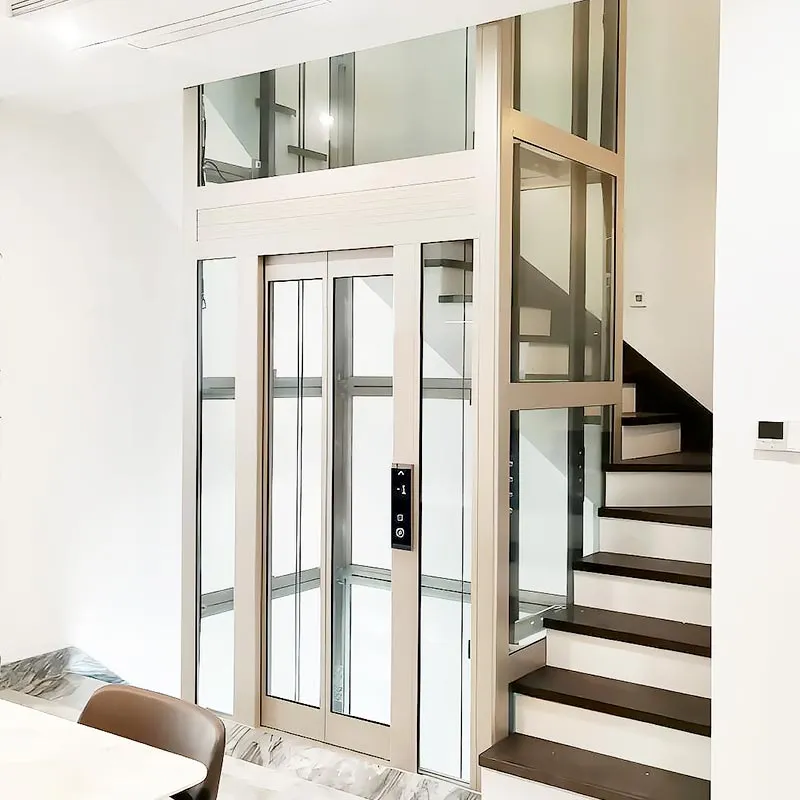
Elevador residencial
Um elevador residencial certificado deve incorporar sistemas de segurança mecânicos e elétricos redundantes para proteger os passageiros em todas as condições.
| Não. | Componente redundante da estrutura de segurança |
| 1 | Dispositivo mecânico de segurança e regulador de velocidade máxima |
| 2 | ARD (Dispositivo Automático de Resgate – Bateria de Reserva) |
| 3 | Cortinas de luz infravermelha para portas de altura total |
| 4 | Válvula de abaixamento manual de emergência / liberação do freio |
| 5 | Molas amortecedoras na parte inferior do eixo |
Dispositivo Automático de Resgate (ARD): Em caso de falha na rede elétrica municipal, o ARD muda automaticamente para a alimentação por bateria, levando a cabine do elevador até o andar mais próximo e abrindo as portas automaticamente.
Regulador de velocidade máxima e dispositivo de segurança: Se a velocidade de descida ultrapassar os limites de segurança (por exemplo, 0,4 m/s), um regulador mecânico fixa instantaneamente a cabine nos trilhos-guia, parando-a independentemente da energia elétrica.
Cortinas de luz infravermelha: Cria uma barreira invisível na entrada. Se um objeto ou animal de estimação cruzar a soleira, as portas se reabrem imediatamente para evitar que fiquem presos.
Como funciona: Utiliza um motor síncrono de ímã permanente (PMSM) e cabos de aço ou correias compostas.
Prós: Funcionamento ultrassilencioso (<45 dB), baixo consumo de energia, aceleração suave.
Melhor para: Casas de vários andares que exigem deslocamentos diários frequentes e uma longa vida útil.
Como funciona: Utiliza uma bomba hidráulica para injetar fluido em um cilindro, elevando o carro.
Prós: Alta capacidade de carga, alta confiabilidade, descida manual de emergência fácil de operar.
Melhor para: Cargas mais pesadas ou residências com altura livre limitada no último andar.
Ao analisar as credenciais do fabricante, procure estas referências internacionais:
Marcação CE / Norma EN 81-41: Norma de segurança europeia elaborada especificamente para plataformas elevatórias verticais e elevadores residenciais.
Controle de Qualidade ISO 9001: Garante a fabricação precisa de aço estrutural, painéis de vidro e componentes mecânicos.
Eu sou Laura, a autora deste artigo e a CEO e Diretora de Marketing da WEMET. Com mais de 15 anos de experiência no setor de elevação inteligente, eu me dedico a ajudar os clientes a encontrar as soluções de acesso certas para suas necessidades. Se tiver alguma dúvida, sinta-se à vontade para entrar em contato comigo a qualquer momento.
Como instalar um elevador residencial em espaços reduzidos (sem poço grande)
Guia de Normas de Segurança e Tecnologia de Acionamento para Elevadores Residenciais
Quanto custa um elevador residencial? Detalhamento de preços para 2026 e retorno sobre o investimento
Guia Completo sobre Elevadores Residenciais: Especificações, Espaço e Design em Vidro (2026)

 AWP
AWP
 Elevador industrial
 Elevador residencial
 Armazenamento inteligente