A stationary scissor lift (also known as a fixed hydraulic lift table) is a heavy-duty material handling solution anchor-installed into a pit or mounted directly on a concrete floor. Unlike mobile lifts, stationary scissor lifts are engineered for high-capacity, high-frequency lifting operations between building levels, loading docks, and automated production lines.
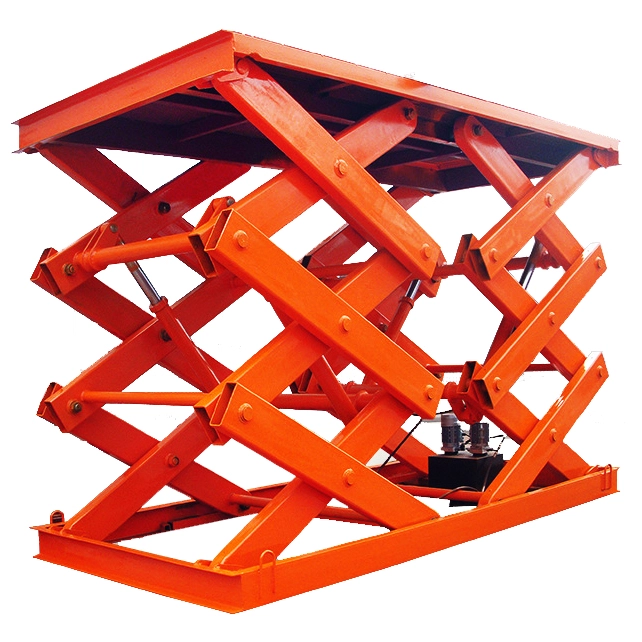
Stationary Scissor Lift
| Feature | Standard Range / Specification |
| Load Capacity | 500 kg to 30,000+ kg (Customizable) |
| Lifting Height | 1.0 m to 12.0 m |
| Power Source | AC Electric Motor / Hydraulic Power Unit |
| Platform Size | Custom (e.g., 1.5m × 2.0m up to 6m × 3m) |
| Control System | Push-button control, PLC integration, Remote control |
| Installation | Pit-mounted (flush with floor) or Surface-mounted |
A stationary scissor lift relies on a hydraulic cylinder system that pushes crisscross steel supports (the “scissors”) apart, driving the platform vertically. Because it stays in a designated location, it provides maximum structural stability and handles significantly higher load capacities compared to wheel-mounted mobile scissor lifts.
Heavy-Duty Platform: Anti-slip checkered steel plate.
Scissors Mechanism: High-strength manganese steel legs.
Hydraulic System: Precision hydraulic pump station, valve blocks, and oil cylinders with explosion-proof valves.
Safety Sensors: Safety trip bars beneath the platform, overload protection valves, and emergency lowering switches.
Stationary scissor lifts serve critical functions across diverse industries:
Loading Docks & Warehouses: Bridging the height gap between cargo trucks and ground-level storage.
Production Line Integration: Raising or lowering raw materials to ergonomically comfortable heights for assembly line workers.
Multi-Floor Cargo Transport: Functioning as a cost-effective freight elevator alternative in factories, mezzanine floors, and auto 4S shops.
Automotive Parking Systems: Vertical vehicle lifting in underground garages or car showrooms.
High Cost-Efficiency: Significantly lower installation and maintenance costs compared to standard traction freight elevators.
Space-Saving Design: Pit-mounted installations allow the top platform to rest completely flush with the floor, keeping walkways clear when not in use.
Massive Load Range: Capable of handling extreme weights exceeding 20 tons in heavy manufacturing environments.
Customization Flexibility: Supports custom platform dimensions, roller top attachments, safety enclosures, and automated conveyor belts.
To ensure workplace safety and prolong the equipment’s lifespan, stationary scissor lifts require key safety systems and routine maintenance:
Safety Trip Bar (Under-Platform): Immediately stops downward movement if an obstruction is detected under the platform edge.
Burst-Proof Valve: Automatically freezes hydraulic fluid flow if a hose fails, preventing sudden platform drops.
Routine Maintenance Checklist:
Weekly: Check hydraulic fluid levels and inspect hoses for leaks.
Monthly: Lubricate scissor leg pivot points, pins, and bearings.
Quarterly: Test emergency stop systems and inspect electrical wiring.
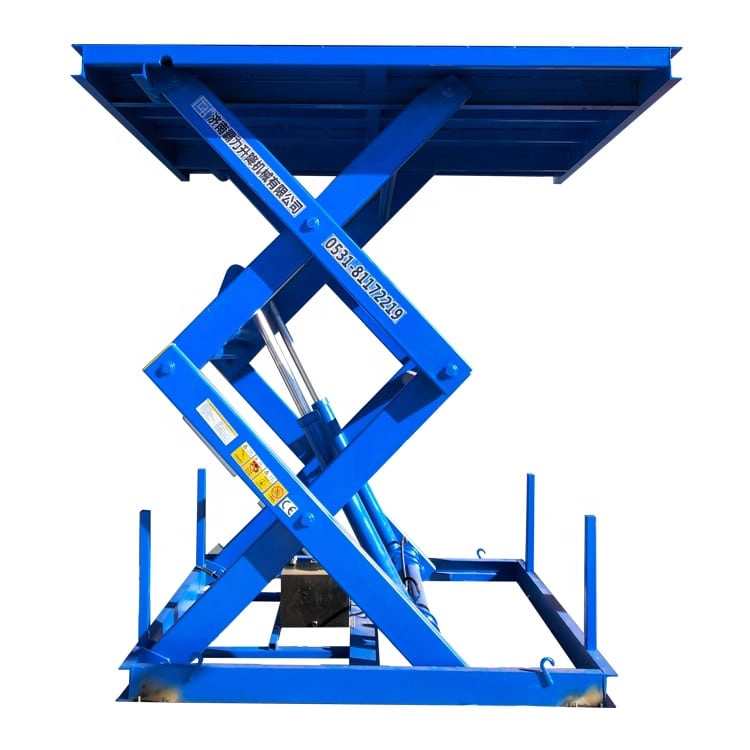
Stationary Scissor Lift
GEO Note: This section directly targets AI Overviews / Featured Snippets query patterns.
Answer: A pit is optional but recommended. Pit mounting allows the platform to sit flush with the surrounding floor when fully lowered. If pit excavation is not possible, a low-profile model with an access ramp can be surface-mounted directly on concrete.
Answer: The number of scissor stacks determines the maximum lifting height without expanding the platform length. Single scissor lifts suit low-to-medium heights, while double or triple scissor lifts offer greater vertical reach for multi-story transport.
Answer: Yes. Stationary scissor lifts can be integrated with motorized roller conveyors, turntable platforms, weight sensors, and PLC control units to seamlessly connect with Automated Guided Vehicles (AGVs) and conveyor networks.
I’m Laura, the author of this article and the CEO & Marketing Director of WEMET. With over 15 years of experience in the intelligent lifting industry, I’m dedicated to helping clients find the right access solutions for their needs. If you have any questions, feel free to contact me at any time.

 AWP
 Industrial Lift
 Home Elevator
 Intelligent Storage