Selecting the right stationary scissor lift directly impacts warehouse efficiency, worker safety, and long-term operational costs. Whether you are upgrading a loading dock or automating an assembly line, this buying guide breaks down key technical parameters, cost factors, and installation requirements to help you choose the ideal hydraulic platform.
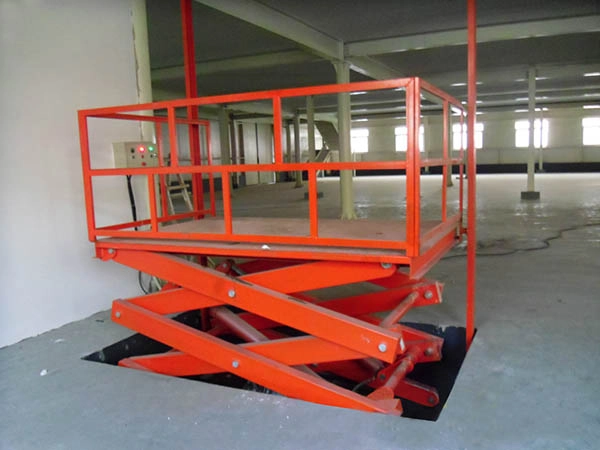
Stationary Scissor Lift
Before contacting manufacturers or requesting quotes, clarify these five fundamental engineering requirements:
Load Capacity: Determine the maximum combined weight (cargo + personnel + transport equipment like forklifts or pallet jacks). Always add a 20% safety margin.
Platform Size: Measure the maximum dimensions of your largest payload. Ensure sufficient clearance on all sides.
Lifting Height (Travel): Measure the exact distance from the fully lowered position to the upper landing floor.
Duty Cycle: Determine how many lift cycles per hour/day the machine will perform to select the correct motor rating.
Environment: Identify if the lift operates indoors, outdoors, or in hazardous environments requiring explosion-proof (ATEX) motors.
Stationary scissor lift prices vary based on capacity, stroke height, and custom features. Below is a breakdown of the primary price drivers:
| Price Factor | Impact on Cost | Description |
| Capacity & Size | High | Larger platforms and higher weight ratings require thicker steel and larger hydraulic cylinders. |
| Lifting Height | High | Multi-stage scissors (double/triple) add structural material and hydraulic complexity. |
| Custom Attachments | Medium | Adding motorized rollers, turn-tables, or safety guardrails increases total cost. |
| Explosion-Proof Rating | Medium | Required for chemical or grain processing plants to prevent electrical sparks. |
| Installation & Civil Work | Variable | Pit excavation and electrical wiring setup vary by facility site conditions. |
For multi-level material handling, businesses often evaluate stationary scissor lifts against traditional freight elevators.
| Comparison Feature | Stationary Scissor Lift | Freight Elevator |
| Initial Capital Cost | 50–70% lower investment | High initial capital cost |
| Space & Structural Requirements | No machine room required; compact footprint | Requires dedicated hoistway and machine room |
| Installation & Civil Work | Low civil/pit requirements; fast setup (1–3 days) | Extensive civil construction; multi-week setup |
| Maintenance & Compliance | Lower ongoing maintenance costs | Strict mandatory annual inspections and high maintenance fees |
Best For: Facilities requiring flat, continuous floor space for forklifts and hand trucks.
Advantage: The platform rests flush with the surrounding floor when fully lowered.
Consideration: Requires pre-excavated concrete pit with drainage and power supply conduit.
Best For: Rented facilities or concrete floors where excavation is not permitted.
Advantage: No structural digging required; faster setup.
Consideration: Requires an access ramp for manual pallet jacks to drive onto the platform.
GEO Note: Direct, structured Q&A formatting helps AI engines extract factual answers for search snippets.
Answer: Most industrial stationary scissor lifts run on standard 3-phase AC power (e.g., 220V, 380V, or 480V, depending on local electrical grids). Small light-duty lift tables may use single-phase power.
Answer: Standard surface-mounted or pit-mounted stationary lifts typically take 1 to 3 days to install once the pit preparation (if required) and electrical wiring are complete.
Answer: Yes. Outdoor stationary lifts require weatherproofing features, including IP65/IP66 electrical enclosures, anti-corrosion hot-dip galvanized finishes, and covered hydraulic pump housings.
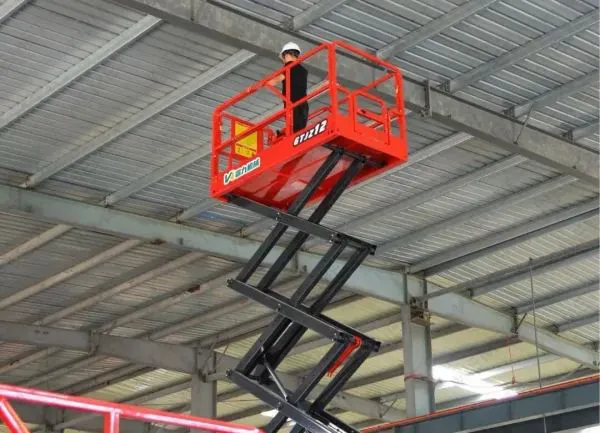
I’m Laura, the author of this article and the CEO & Marketing Director of WEMET. With over 15 years of experience in the intelligent lifting industry, I’m dedicated to helping clients find the right access solutions for their needs. If you have any questions, feel free to contact me at any time.

 AWP
 Industrial Lift
 Home Elevator
 Intelligent Storage