When mobility becomes a concern, many homeowners begin searching for ways to make their homes safer and more accessible. Two of the most popular options are home elevators and stair lifts. While both solutions help people move between floors, they serve different needs and offer very different long-term benefits.
In this guide, we’ll compare home elevators and stair lifts to help homeowners, builders, and accessibility professionals choose the right solution.

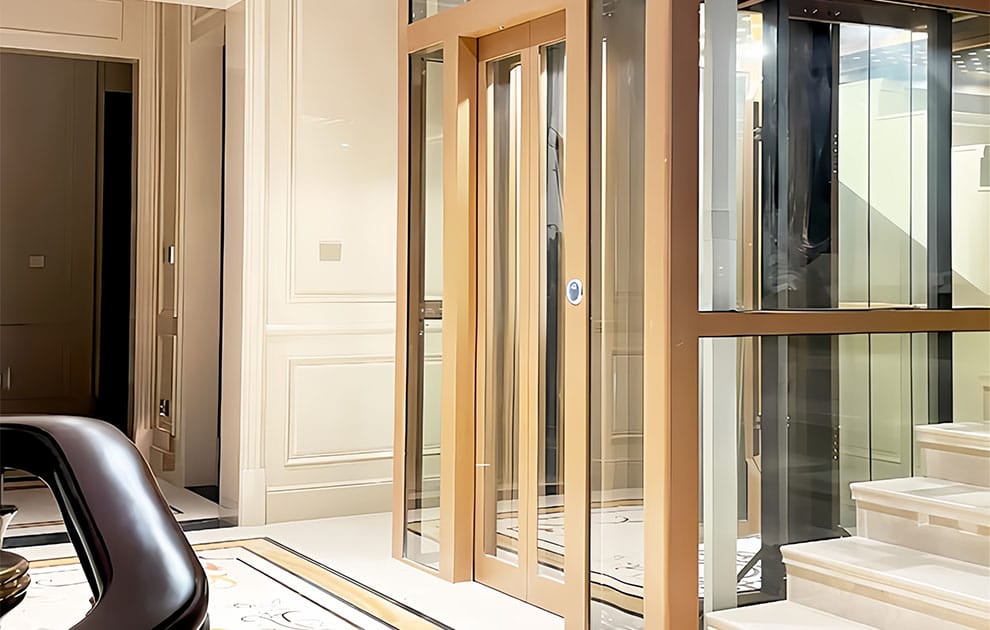
A home elevator is a compact residential lift designed to transport people and goods between multiple floors. Modern home elevators can be installed in villas, duplexes, townhouses, and existing homes with minimal structural modifications.
Today’s residential elevators feature:
Many homeowners choose a home elevator not only for accessibility but also for convenience, luxury, and future property value. Recent industry trends show growing demand for compact and shaftless home elevator solutions that fit modern residential spaces.
A stair lift is a motorized chair that travels along a rail mounted to an existing staircase. Users sit on the chair and ride between floors.
Stair lifts are commonly used by:
Although stair lifts require less installation work, they are typically designed for a single user and have limited carrying capacity.
A home elevator provides full accessibility for nearly all users, including wheelchair users, individuals using walkers, and families transporting heavy items.
A stair lift requires users to transfer into a seated position, making it less suitable for wheelchair users without assistance.
Winner: Home Elevator
Home elevators allow users to transport groceries, luggage, laundry, and other household items effortlessly between floors.
Stair lifts only transport a seated passenger and cannot handle larger loads.
Winner: Home Elevator
Many real estate professionals view residential elevators as long-term home improvements that can increase property appeal and support aging-in-place strategies. Modern buyers increasingly seek homes designed for multigenerational living and future accessibility.
Stair lifts generally do not provide the same level of value enhancement.
Winner: Home Elevator
Stair lifts are easier and faster to install because they attach directly to existing staircases.
Home elevators require more planning but modern shaftless and machine-room-less designs have significantly reduced installation complexity.
Winner: Stair Lift (for simplicity)
A stair lift may address immediate mobility challenges, but a home elevator offers a comprehensive long-term solution for changing family needs.
As homeowners age or family requirements evolve, a residential elevator remains practical for everyone in the household.
Winner: Home Elevator
The modern home elevator has evolved far beyond a luxury feature. Homeowners are increasingly installing residential elevators to:
The growing popularity of home lifts is being driven by improved designs, compact installation options, and smarter technology integration.
Private Residence3
A stair lift may be suitable if:
A home elevator may be the better choice if:
While both stair lifts and home elevators improve mobility, a residential elevator provides greater accessibility, higher convenience, and stronger long-term value. For homeowners planning for the future, a home elevator is often the most complete and versatile solution.
At WEMET Lift Machinery, we provide customizable home elevator solutions designed for modern homes, villas, and accessibility projects worldwide. Whether you’re building a new property or upgrading an existing home, our residential elevators deliver safety, comfort, and long-term reliability.

I’m Laura, the author of this article and the CEO & Marketing Director of WEMET. With over 15 years of experience in the intelligent lifting industry, I’m dedicated to helping clients find the right access solutions for their needs. If you have any questions, feel free to contact me at any time.

 AWP
 Industrial Lift
 Home Elevator
 Intelligent Storage