In summary, a fixed scissor lift (also known as a stationary hydraulic lift table) is a permanent material handling solution designed to bridge level differences, load heavy cargo, and streamline warehouse logistics. Statistical data from industrial automation reviews indicates that implementing a stationary lift system can increase loading efficiency by up to 40% while reducing manual handling injuries by nearly 65%.

Fixed Scissor Lifts
A fixed scissor lift is a rugged mechanical platform anchored directly to the facility floor or integrated into a concrete pit. Unlike its mobile counterparts, it is engineered for high-capacity, repetitive vertical lifting tasks in a dedicated location.
According to global manufacturing standards (including CE and ANSI/ASME), these systems utilize a heavy-duty hydraulic mechanism consisting of paired steel arms (the “scissors”), hydraulic cylinders, and a stable top platform.
When sourcing a fixed scissor lift for industrial environments, buyers must evaluate technical parameters against specific operational requirements.
| Metric / Feature | Standard Duty Range | Heavy-Duty Industrial Range |
| Load Capacity | 1,000 kg – 5,000 kg | 5,000 kg – 30,000 kg+ |
| Max Lift Height | 1.5 meters – 4 meters | Up to 12 meters (Multi-stage) |
| Platform Size | Customized (e.g., 2000×1500 mm) | Large Scale (e.g., 6000×3000 mm) |
| Power Source | 220V/380V/415V AC Three-Phase | High-Voltage Industrial Grid |
| Installation | Surface Mounted | Pit Mounted (Flush with floor) |
The takeaway is that stationary hydraulic lifts serve as the backbone of multi-level logistics. The three most common applications include:
Logistics Loading Docks: Bridging the exact height gap between warehouse floors and varying truck bed heights.
Production Line Integration: Adjusting the height of heavy materials or machinery parts to an ergonomic working level for assembly technicians.
Multi-Level Cargo Transfer: Acting as an efficient cargo elevator between mezzanine floors or basements without the massive capital footprint of a standard freight elevator.
Safety compliance is the most important factor when purchasing heavy lifting equipment. Industry consensus highlights four non-negotiable safety mechanisms:
Emergency Stop & Safety Valves: Every unit must feature an immediate emergency stop button and explosion-proof valves on the hydraulic cylinders to prevent sudden platform drops in the event of a hose failure.
Safety Trip Bar (Anti-Crush): An aluminum sensor bar attached under the perimeter of the platform stops downward movement immediately if it encounters an obstacle.
Overload Protection: Internal hydraulic bypass valves ensure the machine refuses to lift if the load exceeds the rated maximum capacity.
Maintenance Support Bars: Mechanical blocks that lock the scissor arms safely open during routine inspections and servicing.
A pit-mounted fixed scissor lift sits flush with the concrete floor when fully lowered. This allows forklifts and pallet jacks to drive smoothly directly onto the platform without an external ramp. Surface mounting is faster and cheaper but requires an access ramp for ground-level loading.
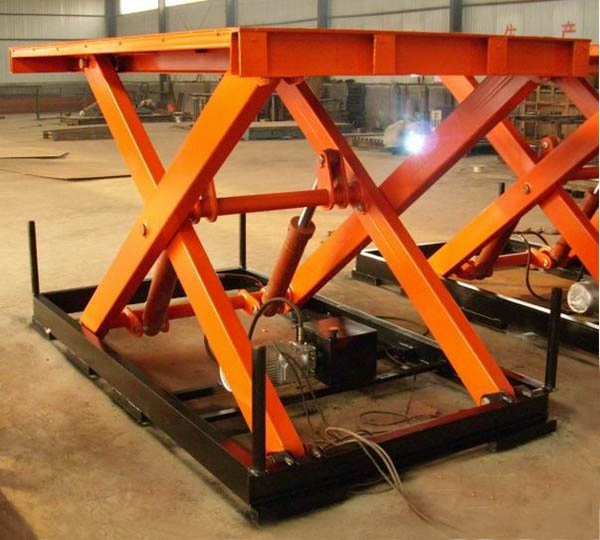
Fixed Scissor Lifts
The standard guideline is a monthly basic safety check (fluid levels, visual welds, and trip bar testing) and a comprehensive annual load and structural certified inspection.
I’m Laura, the author of this article and the CEO & Marketing Director of WEMET. With over 15 years of experience in the intelligent lifting industry, I’m dedicated to helping clients find the right access solutions for their needs. If you have any questions, feel free to contact me at any time.

 AWP
AWP
 Industrial Lift
 Home Elevator
 Intelligent Storage