Are meals arriving cold, staff overworked, and stairs risky? That hurts service and margins. The fix is simple: automate vertical food transport with a reliable kitchen lift.
A kitchen food elevator—also called a dumbwaiter elevator—is a compact lift that moves meals, dishes, and supplies between floors safely and fast, improving operational efficiency in restaurants, hotels, and residential kitchens.
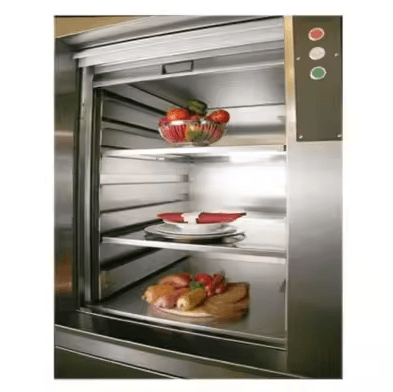
A kitchen food elevator is a small freight system optimized to transport food, plates, cutlery, beverages, and light supplies between floor levels. In many markets it is called a dumbwaiter or food dumbwaiter. Unlike a passenger elevator, it is not designed to carry people. Think of it as a compact cargo lift for kitchens that keeps hands free and staff safe.
In full-service venues, the kitchen lift reduces stair traffic, cuts spills, and speeds service. In homes, a residential dumbwaiter helps families move groceries and tableware with less effort. In both scenarios, the elevator frees time for higher-value tasks like plating, customer care, and hygiene.
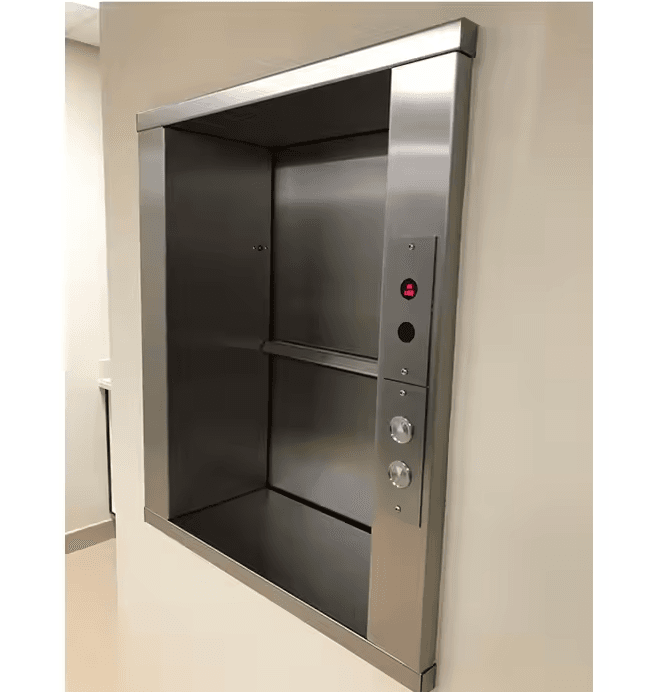
A dumbwaiter elevator uses an elevator car guided inside a shaft or steel structure frame. Power is delivered by either a traction system (motor + counterweight) or a hydraulic power unit. The system stops at pre-set floor levels and opens via swing or bi-parting doors. Interlocks prevent doors from opening unless the car is present—so the elevator is safe to use even during peak rush.
Modern units include microprocessor control, call/cancel buttons, and simple maintenance points. In the case of power interruption, manual lowering or backup release keeps service moving. For hot items, a warming option or insulated elevator car maintains temperature; for delicate pastries, soft start/stop keeps presentation pristine.
“A dumbwaiter is a small freight elevator used to carry food and tableware between floor levels; in a kitchen it is the shortest path to higher operational efficiency.”
| Selection factor | Typical options | What to consider |
|---|---|---|
| Load capacity | 50–200 kg (e.g., food elevator 100kg) | Match to trays, drink crates, or bins. Oversize slightly for peak loads. |
| Car dimensions | 500×500 mm to 800×800 mm | Fit largest tray + hand clearance; verify platform height ergonomics. |
| Opening height | 600–1200 mm | Pass-through height affects staff posture and safety. |
| Stops (floors) | 2–6 floor levels | Typical restaurant is 2–3 floors; hotel service areas may need more. |
| Speed & duty | 0.3–0.5 m/s, high duty | Kitchen cycles can be intense—spec for continuous use. |
| Hatch doors | Swing or bi-parting | Bi-parting is fast and keeps steam/smell inside the elevator. |
| Finish | Stainless steel 304/316 | Corrosion resistance + sanitation for food grade compliance. |
If you operate in narrow buildings, a mini kitchen food model keeps the footprint small while still handling real-world trays. For heavier use, consider a small freight elevator with reinforced door hardware and shelf kits.
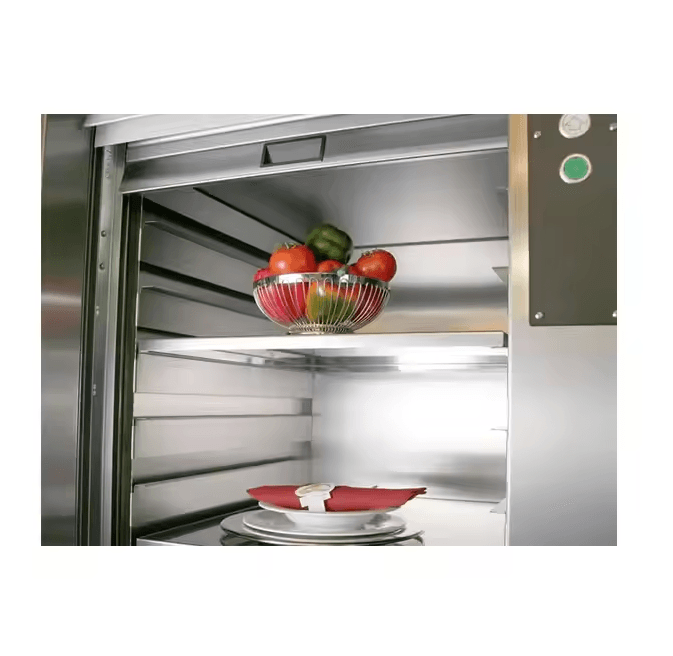
Both systems are common; site conditions and lifecycle goals determine the best elevator type.
Traction (motor + counterweight)
Hydraulic dumbwaiter
Either way, a reputable supplier should detail configuration, anchoring, power, and hatch options, then provide a clear quality management plan and after-sales service schedule
Sanitation matters. A food elevator should be:
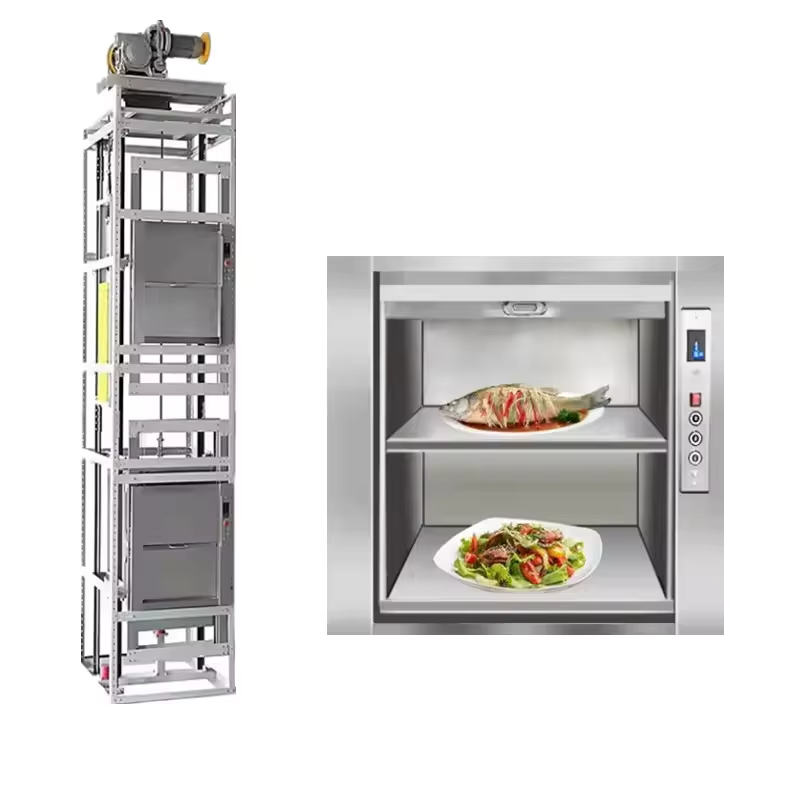
For allergens or odor control, ask for gasketed doors. For breakage control, consider soft-close shelves and anti-slip mats. These features keep the elevator both safe and food grade.
A two-story bistro served 120 covers per night. Staff ran stairs with hot plates and fragile glassware. They installed a 100 kg dumbwaiter elevator (food elevator 100kg) with bi-parting doors and two floor stops.
Results (90 days):
The owner added a second food elevator for the pastry pass—now the kitchen rhythm is steady, and guests notice faster, hotter meals.
What is the difference between a food elevator and a passenger elevator?
A food elevator (or dumbwaiter) is a small freight elevator built to carry food and light goods only. A passenger elevator moves people and requires broader safety and space provisions. Use the right elevator for each job.
How many floors can a kitchen lift serve?
Most kitchen applications serve 2–6 floor levels. We select traction or hydraulic systems to match height, speed, and duty cycle.
Is stainless steel mandatory for food grade?
For hygiene, stainless steel 304/316 is the standard. It resists corrosion, cleans fast, and meets food grade requirements.
Can I install a dumbwaiter in an existing indoor restaurant?
Yes. We use a slim steel structure or wall frame when a masonry shaft is not feasible. The retrofit is fast and tidy.
What power supply do I need?
Most elevators under 200 kg run on conventional outlets; we confirm voltage and configuration during design.
How long is installation?
A typical two-stop system installs in a few days, depending on building readiness and approvals.
Do you offer after-sales service and spare parts?
Yes. WEMET provides after-sales documentation, training, and parts support to keep your elevator reliable for years.
I’m Laura, the author of this article and the CEO & Marketing Director of WEMET. With over 15 years of experience in the intelligent lifting industry, I’m dedicated to helping clients find the right access solutions for their needs. If you have any questions, feel free to contact me at any time.

 AWP
AWP
 Industrial Lift
 Home Elevator
 Intelligent Storage