Sometimes, reaching high places can feel like an impossible task. I remember struggling with ladders and clumsy scaffolding that slowed down every job and increased the risk for my team. Everyone wants a safer and easier way to get the job done.
A self-propelled elevating work platform is a powered machine with its own drive system and a lift that raises people and tools to high areas, making work safer and faster.
When I use these platforms, I control movement and elevation directly from the work basket, which means I do not need to keep climbing up and down or move the base. It saves a huge amount of time and effort, especially on big sites. For jobs that demand both speed and safety—like installing electrical fixtures, changing signage in malls, or handling warehouse maintenance—this equipment gives me a real edge. The freedom to move around obstacles, raise the platform, and handle tools without leaving the basket is hard to beat.

TGZZ SELF PROPELLED ARTICULATED AERIAL WORK PLATFORM
Every project has unique challenges, and having the right equipment is the first step to doing a good job. Early in my career, I mixed up these terms too, but experience taught me that the right platform makes all the difference.
An aerial lift is any machine that can lift people and tools above the ground, while a boom lift is a special type with a long arm (boom) that lets me reach up, out, and over barriers or obstacles.
I learned quickly that not all jobs are the same. If you need to work directly above your head, a scissor lift or a Articulated Aerial Work Platform does the trick. But sometimes the job is complicated. Imagine changing a sign over a staircase, or fixing a window behind landscaping or fences—a straight-up lift won’t get you there. That’s when a Articulated Aerial Work Platform comes in. Boom lifts are perfect for stretching across gaps, reaching above obstacles, and providing access to places that other aerial lifts just can’t handle. The long, extendable boom is what sets them apart. All Articulated Aerial Work Platform are aerial lifts, but only boom lifts can provide that outreach flexibility.
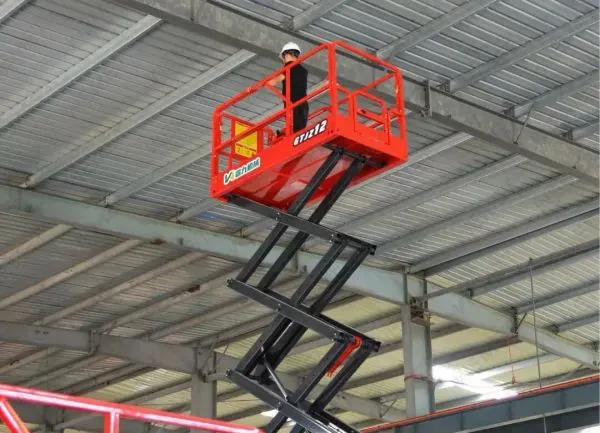
When I step onto a jobsite, I look at the surroundings. Open indoor areas, like warehouses, are perfect for scissor lifts—wide platforms, stable movement, and easy up-and-down travel. But if there are obstacles, or I need to move around corners or over machinery, I go for a boom lift. For very tight, indoor spaces, a vertical mast lift fits where other machines can’t go.
1. Scissor Lift
Goes straight up and down.
Large work platform, perfect for multiple workers.
Great for tasks like ceiling repairs or stocking shelves.

2. Vertical Mast Lift
Slim, fits through doorways.
Moves straight up, works in narrow aisles.
Ideal for single-person jobs in crowded places.
3. Boom Lift
Arm reaches up, out, and over.
Can get around obstacles, like trees, fences, or parked cars.
Flexible for construction, painting, and outdoor maintenance.
| Lift Type | Movement | Platform Size | Best Use |
|---|---|---|---|
| Scissor Lift | Vertical | Wide | Warehouses, open spaces |
| Mast Lift | Vertical | Slim | Indoor, tight spaces |
| Boom Lift | Vertical + outreach | Small basket | Over obstacles, hard-to-reach jobs |
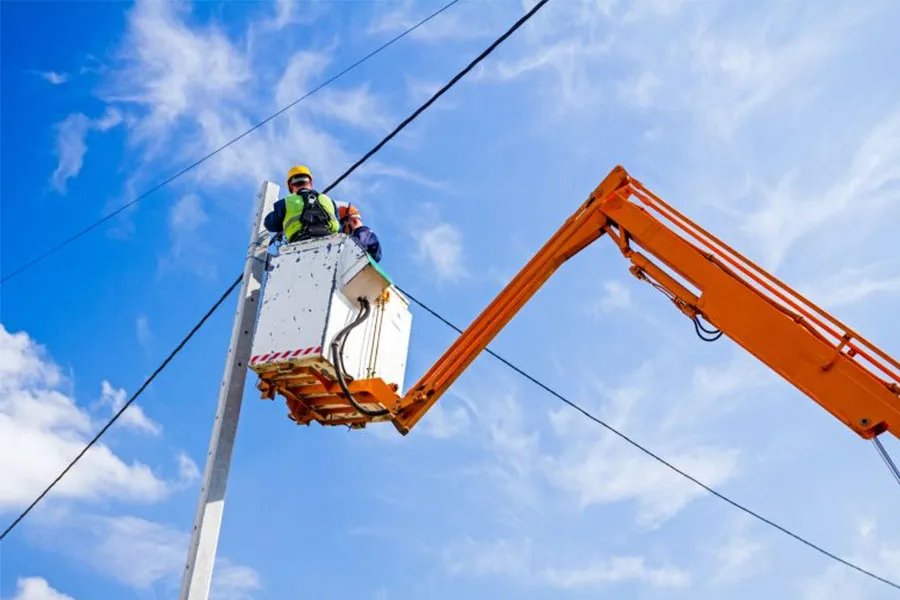
Selecting between straight (telescopic) and articulating boom lifts depends on more than just reach—it’s about the job’s layout and what stands in your way. I remember using both types in one week: on a wide-open parking lot, I used a straight boom to change tall lights; later, inside a crowded plant, an articulating boom made it possible to reach over machines and ductwork.
A straight boom lift gives maximum height and outreach in a straight line, while an articulating boom lift can bend at multiple joints, helping me reach up and over obstacles or around corners.
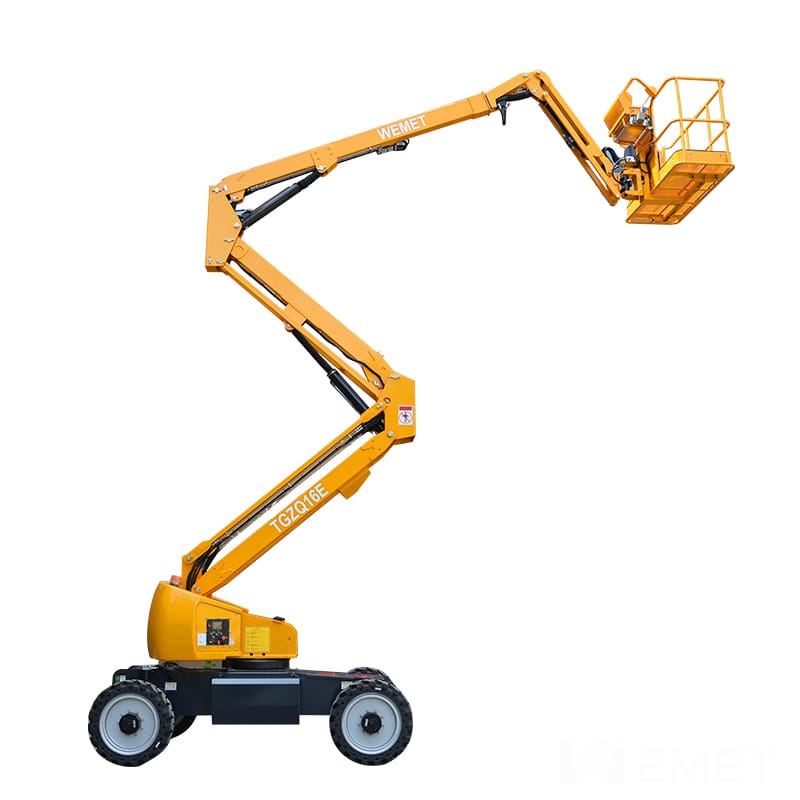
With a straight boom, I get the longest possible reach from the base—perfect for jobs like bridge inspection or outdoor building maintenance, where space is open and clear. Articulating boom lifts are the workhorses when things get tight. If I need to fix lighting behind a wall or trim trees with lots of branches in the way, the articulating joints allow me to maneuver into awkward positions. For me, it’s all about matching the machine to the obstacles on site. If there’s nothing between the lift and the work, I use straight. If there are barriers, articulating is better.
Let’s break it down even further with scenarios and a detailed table.
Straight Boom Lift (Telescopic)
Articulating Boom Lift
| Feature | Straight Boom Lift | Articulated Aerial Work Platform |
|---|---|---|
| Max Reach | Highest & Farthest | Moderate, but flexible |
| Maneuverability | Limited (straight) | Excellent (multi-joint) |
| Best For | Open, unobstructed | Crowded, obstacle-filled |
| Platform Size | Small basket | Small basket |
| Indoor/Outdoor | Mostly outdoor | Both indoor and outdoor |
When I train new team members, I tell them to walk the site, look for obstacles, and then decide: go straight for maximum reach, or articulating for flexibility.
Industrial Zone
Self-propelled elevating work platforms changed the way I approach jobs at height. By understanding the differences between each type, I choose the right lift, avoid wasted time, and keep everyone safe and productive.
I’m Laura, the author of this article and the CEO & Marketing Director of WEMET. With over 15 years of experience in the intelligent lifting industry, I’m dedicated to helping clients find the right access solutions for their needs. If you have any questions, feel free to contact me at any time.

 AWP
AWP
 Industrial Lift
 Home Elevator
 Intelligent Storage