Working at heights always brings certain challenges. Scaffolding takes time and ladders can be unstable. Most of us in construction, facility management, or maintenance have faced the hassle and danger of trying to reach something high up. That’s where the scissor lift comes in. It’s a modern solution designed to keep people safe and help them work faster above the ground.
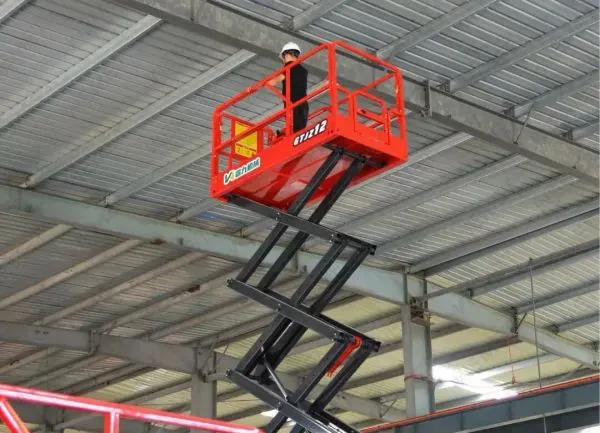
A scissor lift is a mobile elevating work platform that uses a crisscrossed, folding support system to lift people and materials directly upward. These machines are built for stability and allow for secure vertical access in many settings.
The mobile lifting platform is a special equipment for high-altitude operations with a wide range of uses. Its scissor mechanical structure enables the lifting platform to have higher stability, a large working platform and a higher load-bearing capacity, so that the high-altitude operation range is larger and suitable for simultaneous operation by multiple people.

Whenever I have a job that requires reliable elevation—whether it’s changing lights in a warehouse, installing overhead ducts, or repairing exterior signage—I prefer using a scissor lift. Unlike a standard ladder, I don’t need to worry about wobbling or finding a level spot. These lifts are designed to provide a flat, steady surface and can usually carry both people and tools up in one trip. Over time, I’ve found them indispensable for all sorts of projects.
Every job site has its own set of challenges, but working above ground level is one of the most common. Not having the right equipment can slow things down, create safety hazards, or even lead to costly mistakes. I remember my first big warehouse retrofit—the only way we got everything done on schedule was by having a reliable scissor lift on hand.
Scissor lifts are widely used for tasks such as building maintenance, overhead repairs, equipment installation, inventory picking, painting, and electrical work—basically, any job that calls for stable, elevated access.
If you look around most commercial facilities, construction zones, or even some retail environments, you’ll see scissor lifts at work. They’re popular for installing HVAC systems, replacing high-bay lights, stocking goods on high shelves, or setting up banners at events. On construction sites, we use them to finish drywall, hang ceilings, and paint areas that are hard to reach. Their ability to hold two or more workers, along with their gear, saves time and effort. Compared to scaffolding, setup is quick and moving the lift around is much easier.
| Industry | Typical Scissor Lift Applications |
|---|---|
| Construction | Drywall, ceilings, lighting installs |
| Warehousing | Picking, rack repair, stocktaking |
| Retail | Hanging signage, changing displays |
| Manufacturing | Machine servicing, assembly, upgrades |
| Public Facilities | Maintenance, event setup, cleaning |

This flexibility is what makes scissor lifts a staple for my own work and why I recommend them to anyone who needs to safely reach overhead.
Anytime I’m working above the ground, safety is my main concern. I’ve seen accidents happen from falls or equipment failures, so I always make sure I’m using a lift with solid safety features. Scissor lifts are specifically designed to reduce these risks. They have a stable base, guardrails, and a secure platform, which helps me focus on the job, not on keeping my balance.
When operated as intended, scissor lifts are among the safest ways to access high work areas. They include safety rails, tilt sensors, overload protection, emergency stop buttons, and emergency lowering systems, all of which are critical for injury prevention.
In my experience, following the manufacturer’s guidelines and doing a safety check before each use makes a big difference. Most new scissor lifts have built-in warning systems that alert you if something isn’t right—like a tilt alarm that sounds if the lift isn’t on level ground or an overload sensor that won’t let you exceed the safe capacity. These features, combined with regular operator training, make accidents much less likely.
The word “lift” gets thrown around a lot, but not all lifts are the same. If you’ve ever rented equipment or browsed a supplier catalog, you’ve probably seen terms like boom lift, mast lift, and scissor lift. Each has a unique design and function.
A lift is any equipment used to raise materials or people up. A scissor lift, however, uses a set of crossed supports to move only straight up and down, offering a wide and stable work platform for tasks that need vertical reach but not side-to-side movement.

I often need to explain to new clients that while a boom lift can reach over obstacles and access awkward spaces, a scissor lift is better for jobs where you need a big platform and stable, vertical movement. For example, if I’m working on warehouse lighting, I want the room to move around and bring up parts or tools, which a scissor lift easily handles. If I’m trimming trees or painting at different angles, a boom lift is the better option. It really depends on the space and the kind of access required.
| Type | Movement | Platform Size | Best For |
|---|---|---|---|
| Scissor Lift | Up and down | Wide, stable | Warehouses, construction |
| Boom Lift | Up and over | Small basket | Outdoors, obstacles |
| Mast Lift | Vertical only | Very compact | Small indoor spaces |
Choosing the right lift saves time, keeps people safe, and makes difficult jobs much easier. My rule of thumb is: for large, flat, vertical jobs—go with a mobile scissor lift
In my experience, scissor lifts have changed the way we work at height. They combine safety, efficiency, and versatility, making every job above ground safer and more productive.
I’m Laura, the author of this article and the CEO & Marketing Director of WEMET. With over 15 years of experience in the intelligent lifting industry, I’m dedicated to helping clients find the right access solutions for their needs. If you have any questions, feel free to contact me at any time.

 AWP
AWP
 Industrial Lift
 Home Elevator
 Intelligent Storage